Building Emotional Strength in Competitive Sports
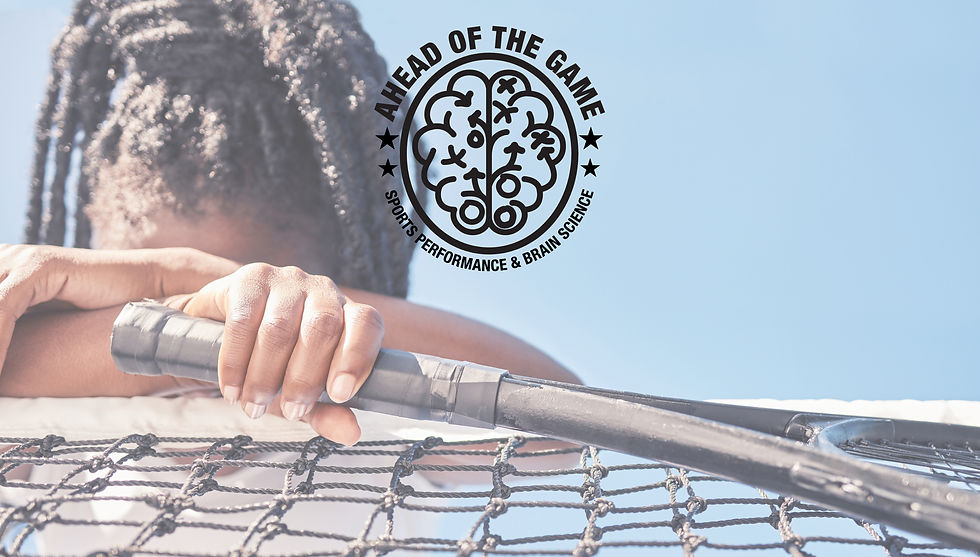
In today’s competitive sports environment, student-athletes face more than just physical challenges. Balancing academics, athletics, and social pressures can create a storm of stress and anxiety. At Ahead of the Game, we know that mental and emotional strength is just as important as physical training for peak performance.
Drawing on the work and previous interviews of Dr. Eddie O’Connor, Chief Sports Psychologist at Atrium Health Musculoskeletal Institute, we highlight common mental health challenges athletes face—and practical ways parents and coaches can provide support.
Understanding Anxiety: Turning Pressure into Performance
Anxiety isn’t a weakness—it’s a signal. Dr. O’Connor explains:
"Anxiety is your mind alerting you to something important. The challenge isn’t feeling anxious, but learning how to perform with it."
Athletes often face real stakes—playing time, team expectations, or personal goals. By acknowledging anxiety rather than denying it, athletes can use it as fuel to prepare, train, and compete. Reframing anxiety as a tool transforms pressure into motivation.
Tackling Imposter Syndrome and Self-Doubt
Many athletes struggle with imposter syndrome—feeling undeserving despite achievements. Dr. O’Connor advises:
"We all have an inner voice that warns us of danger. The key is choosing how we respond. Use it to drive you forward; don’t let it distract you."
By challenging negative self-talk and viewing self-doubt as a sign of caring about performance, athletes can turn uncertainty into determination.
Reframing Perfectionism: Mistakes as Growth
Perfectionism can push athletes to excel—but it can also lead to harsh self-criticism. Dr. O’Connor recommends embracing mistakes as opportunities for improvement:
"True perfectionism isn’t about never making mistakes; it’s about responding to them productively and learning from each setback."
Athletes who adopt this mindset—what Dr. O’Connor calls “perfect perfectionists”—pursue excellence while maintaining self-compassion and resilience.
How Parents Can Support Mental Fitness
Parents are key to fostering emotional strength. Instead of trying to fix anxiety, Dr. O’Connor suggests validating feelings and asking, “What do you want to do about it?” Encouraging preparation, effort, and ownership helps transform anxiety from a barrier into a tool for growth.
He also emphasizes avoiding common pitfalls:
Make the car ride home a decompression zone, not a critique session.
Celebrate effort rather than results.
Model good sportsmanship and avoid sideline coaching or yelling at referees.
"Tell your kids, ‘I love watching you play,’ regardless of the outcome," Dr. O’Connor says. "This communicates unconditional support and reduces performance anxiety driven by fear of disappointing parents."
Mental Fitness Matters
At Ahead of the Game, we focus on helping athletes strengthen their mental skills just as much as their physical ones. By learning to manage anxiety, challenge self-doubt, and reframe perfectionism, athletes can perform at their best while developing resilience that carries beyond the field.
Supporting athletes is about more than coaching—they need understanding, guidance, and strategies to build emotional strength. With the right approach, parents, coaches, and athletes can work together to create a healthy, high-performance mindset that lasts a lifetime.allenges. By learning to manage technology use, athletes can protect their mental health, sharpen their performance, and truly stay ahead of the game.


Comments